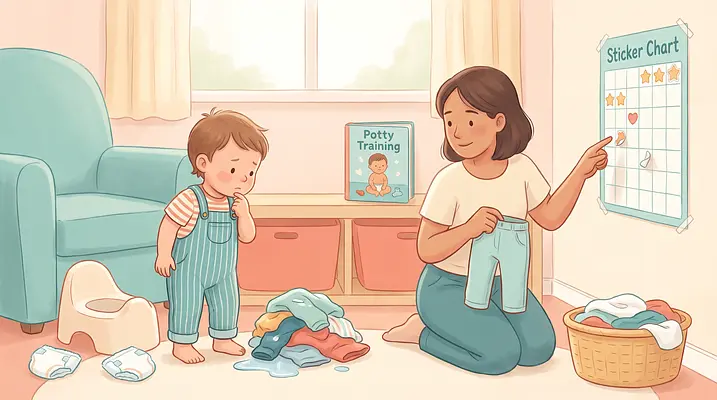
Just when you thought you were out of the woods—celebrating dry days and sticker charts galore—suddenly, you find yourself back at square one. It’s a scenario that catches many parents off guard, often bringing a mix of frustration, confusion, and a fair bit of laundry. If your little one has suddenly started having accidents after weeks of success, take a deep breath; you are not doing anything wrong, and your child hasn't forgotten how to use the toilet. This phenomenon, known as potty training regression, is a completely normal part of the developmental journey, and with a little patience and the right strategy, you can get back on track.
🧩 Understanding the "Why"
Before you can fix the leak, so to speak, it helps to understand where it is coming from. Regression is rarely about defiance or laziness; it is almost always a signal that your child is processing something new or feeling overwhelmed. Identifying the root cause is the first step toward solving the problem.
- Look for recent major life changes like a new sibling, a move, or a new daycare provider. 👶
- Consider if your child is fighting off a minor illness or infection. 🤒
- Watch for signs of emotional stress or fear, such as a scary automatic flush in a public restroom. 😟
- Remember that mastering a new skill often causes temporary backsliding in other areas. 🧠
🧘 Managing Your Own Mindset
Your reaction to accidents sets the tone for how quickly your child recovers. If you treat regression as a failure, it becomes a much bigger hurdle for your little one to overcome. Staying calm is your most powerful tool in this phase.
- Take a deep breath before reacting to an accident to keep your tone neutral. 🌬️
- Avoid showing frustration or disappointment, even if you are scrubbing a carpet. 🧼
- Reframe your thinking to view this as a temporary pause rather than a permanent failure. 🔄
- Remind yourself that regression is a standard developmental milestone, not a parenting fail. 🏆
🗓️ Resetting the Routine
Sometimes, the excitement of initial success leads to lax routines, and children simply need a gentle reminder of the expectations. Going back to basics doesn't mean starting from scratch, but rather reinforcing the structure that worked initially. Think of it as a "tune-up" for their potty habits.
- Return to scheduled potty breaks every 90 minutes to rebuild the muscle memory. ⏰
- Use a visual timer so your child knows exactly when the next try is coming. ⌛
- Create a consistent ritual, like reading a specific book, while sitting on the potty. 📖
- Offer a small, immediate reward for simply sitting, regardless of the outcome. 🍭
🧺 Handling Accidents with Dignity
How you handle the mess matters just as much as how you handle the success. The goal is to remove the shame from the equation while reinforcing that the potty is the right place to go. Keep the cleanup process boring and matter-of-fact to minimize attention given to the accident.
- Involve your child in the cleanup process by having them carry their wet clothes to the hamper. 🧺
- Use neutral language like "Pee goes in the potty" rather than "You made a mess." 🗣️
- Avoid asking "Do you need to go?" and instead state "It is time to try." 🚽
- Praise them enthusiastically when they do make it to the bathroom in time. 👏
🚫 Avoiding Power Struggles
Toddlers and preschoolers love control, and potty training is a prime battleground for testing boundaries. If you push too hard, they will push back by holding it in or having accidents. You want to make using the potty their idea, or at least a non-negotiable part of the day that isn't up for debate.
- Offer limited choices, such as "Do you want to use the upstairs potty or the downstairs one?" 🏠
- Read books about potty training together to normalize the process without lecturing. 📚
- Drop the subject entirely for a few hours if tensions are running high. 🧸
- Focus on "body autonomy" by teaching them to listen to their own body signals. 👂
🩺 Knowing When to Call the Doctor
While most regression is behavioral, there are times when a medical issue is at play. It is always better to be safe than sorry, so trust your gut if something feels physically off with your child. A quick check-up can rule out the easy-to-fix biological causes.
- Schedule a visit if your child complains of pain or burning while urinating. 🩺
- Mention any sudden onset of bedwetting in a child who was previously dry at night. 🌙
- Ask about constipation, as a full bowel can press on the bladder and cause accidents. 🍎
- Check for rashes or irritation that might make your child want to avoid the toilet. 🔴
Regression is a detour, not a dead end. It requires you to dig deep into your reserves of patience, but it is a fleeting phase. By staying consistent, keeping your cool, and offering plenty of snuggles along the way, you will help your child regain their confidence. Soon enough, you’ll be back to celebrating dry days and moving forward once more.
Quick Action Plan
- Check for physical causes like constipation or urinary tract infections today.
- Set a timer for regular potty breaks every 90 minutes to rebuild the habit.
- Switch to loose, easy-to-pull-down clothing to reduce accidents caused by delay.
- React to accidents with a calm, neutral voice and involve the child in cleanup.
- Celebrate every successful trip to the bathroom with immediate verbal praise.
If you are looking for a way to stay organized during this phase, consider using the “Potty Whiz” app. It helps families collaborate by logging activities and setting timers, making it easier to spot patterns and stay consistent.